Building clearer public-service workflows in Dubai.
My Dubai Municipality engagement, delivered through XD.AI, covered Montaji Plus, UPS, and their shared frontend foundations. This chapter focuses on the services themselves: helping people work through product registration, compliance, and permit applications.
Explore this chapter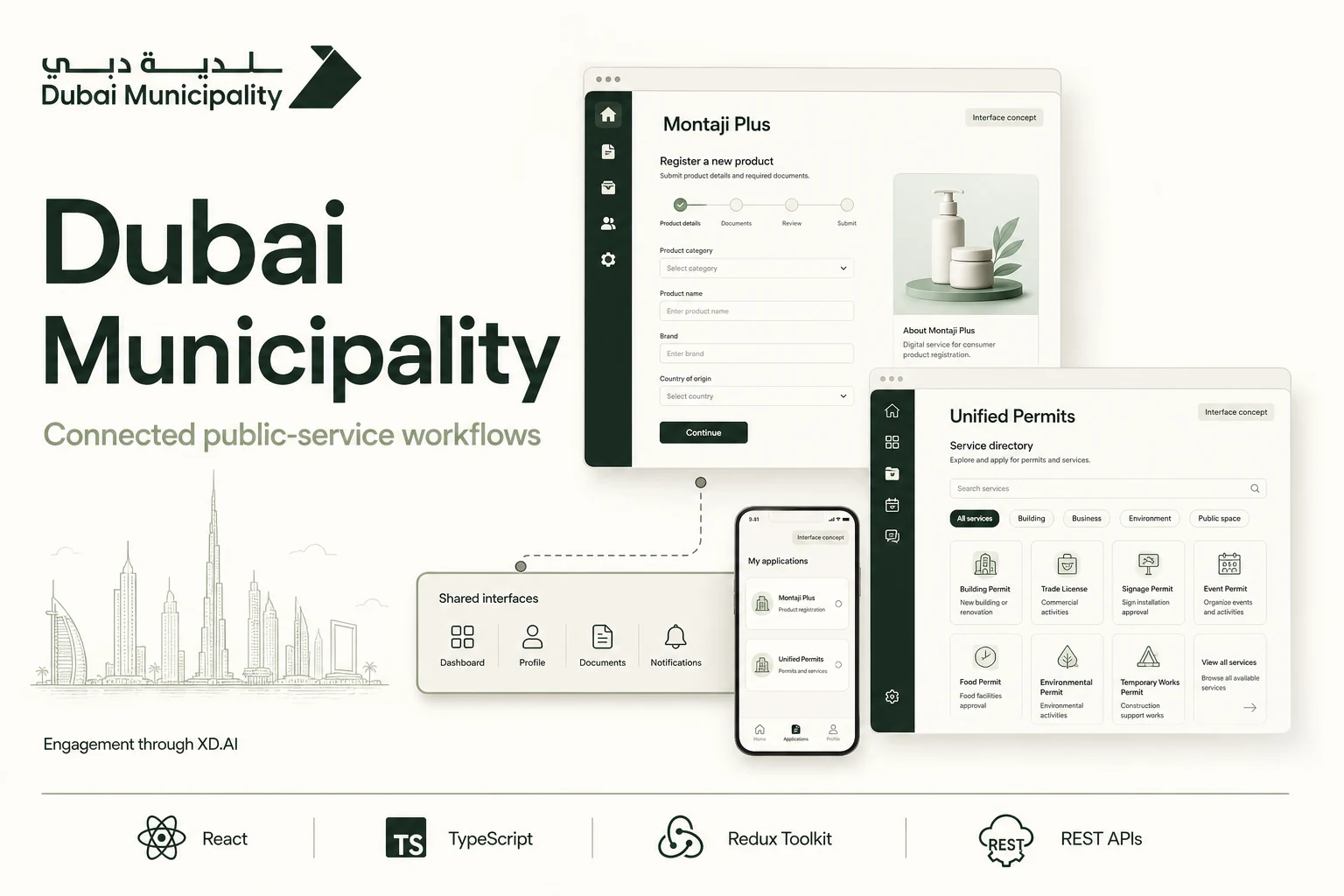
Public services with different rules
Product registration and permitting each carry their own process and data requirements. Montaji Plus supports product registration and import and export workflows. UPS brings permit and licensing services into a more consistent application experience. I worked on frontend modules within both.
The engineering challenge was to represent those differences clearly while sharing the parts that should behave consistently. The shared React component library supported that work across the Municipality projects, alongside common integration and state-management patterns.
What I worked on.
Registration and compliance workflows
On Montaji Plus, I contributed frontend architecture and implementation for product registration, shipment-related workflows, and compliance validation. The work required clear steps and responsive views of large amounts of data, with consistent behavior across the modules.
Permit and licensing journeys
On UPS, I worked on shared UI and integration patterns across permit services. I helped turn service-specific requirements into maintainable application flows, keeping common behavior reusable while allowing each service to retain its own rules.
Consistent interface foundations
I worked on the shared React component library used across the government platforms. Reusable components gave teams a common starting point for interface behavior, accessibility, and styling, with documentation to support their use across products.
Dependable data interactions
I contributed caching, state, and rendering improvements for data-heavy screens. These decisions supported the day-to-day work of using the services, where loading records and moving through a workflow are part of the same experience.
How I work.
Keep the service process visible
I work through the purpose of a step and the information it requires before settling its interface. Collaboration with backend, QA, and design helped align the frontend with service rules and the states users would encounter.
Separate common behavior from service rules
I use shared components and integration conventions for behavior that repeats. I keep the particular registration or permit requirements close to their workflow so that reuse supports the service without obscuring how it works.
Skills I developed.
Modeling complex service journeys
This engagement strengthened my ability to translate regulatory and operational requirements into application structure. The interface needs to make the process understandable without losing the rules that determine its behavior.
Consistency across separate services
I learned more about balancing a shared design system with different product needs. A common component is useful when it carries predictable behavior into a new workflow and remains understandable to its implementers.
Coordinating system boundaries
Working across these services developed my system design judgment around API integration, frontend state, and validation. It also reinforced the value of reviewing a workflow with the people responsible for its other parts.
Inside the work.
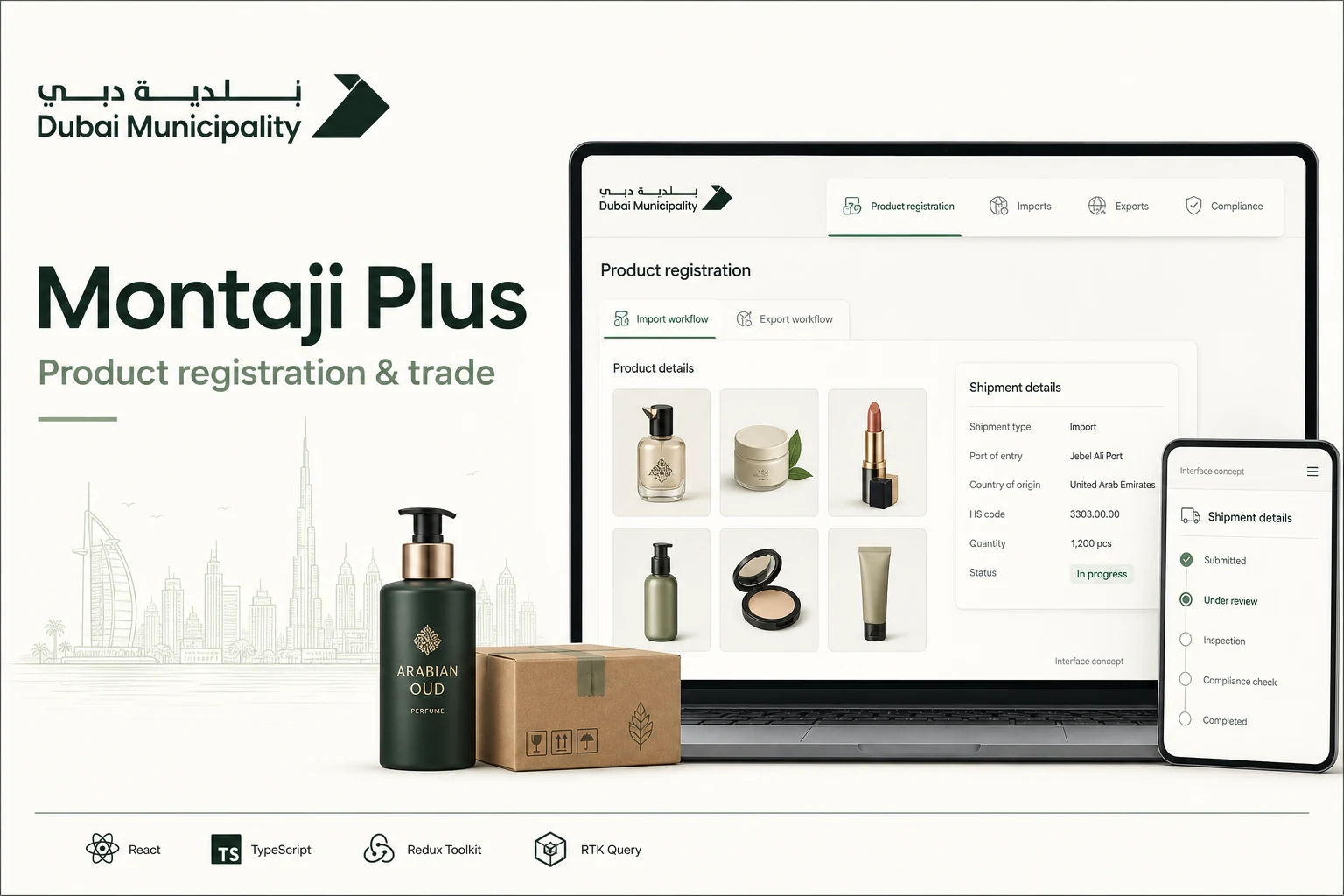
Montaji Plus
Dubai Municipality platform for product registration, import/export workflows, and compliance checks built for large-scale, data-heavy operations.
Read the engineering story
The problem
High-volume product and shipment workflows required fast rendering, stable UX, and consistent patterns across complex compliance steps.
The approach
Built a scalable frontend architecture using React and TypeScript, introduced optimized data-fetching and caching strategies, and applied virtualization to handle large datasets efficiently.
Implementation details are generalized to respect government and client confidentiality. The project is a proprietary government project and is not open source.
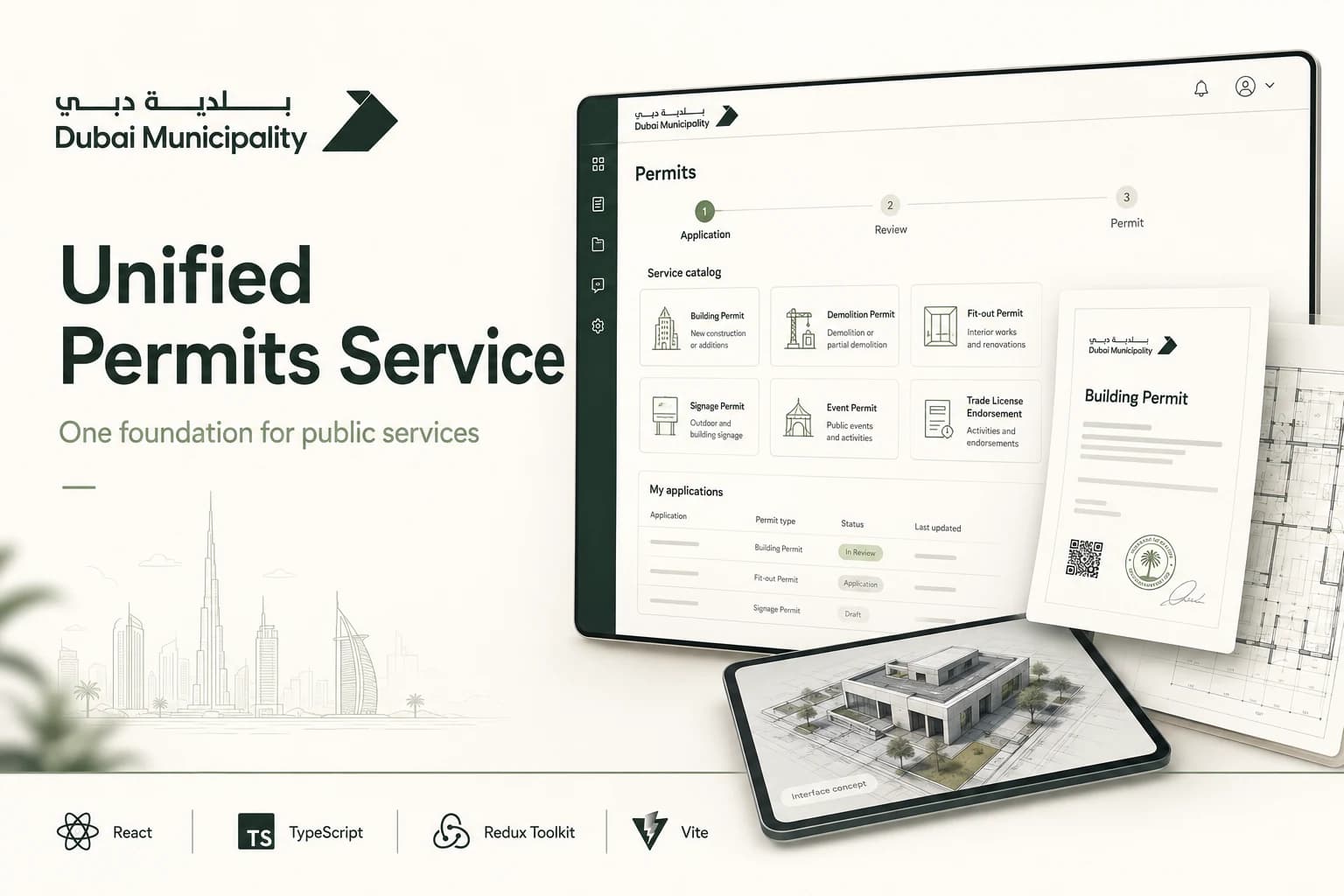
Unified Permits Service
Unified permitting platform consolidating multiple licensing services into consistent user journeys and shared UI and integration standards across Dubai Municipality.
Read the engineering story
The problem
Multiple permit services evolved independently, leading to inconsistent user experiences, duplicated frontend logic, and increasing maintenance and delivery costs.
The approach
Introduced shared frontend architecture, reusable UI components, and standardized integration patterns to unify user journeys and reduce duplication across services.
Technical and business details are generalized due to government confidentiality. The project is a proprietary government project and is not open source.
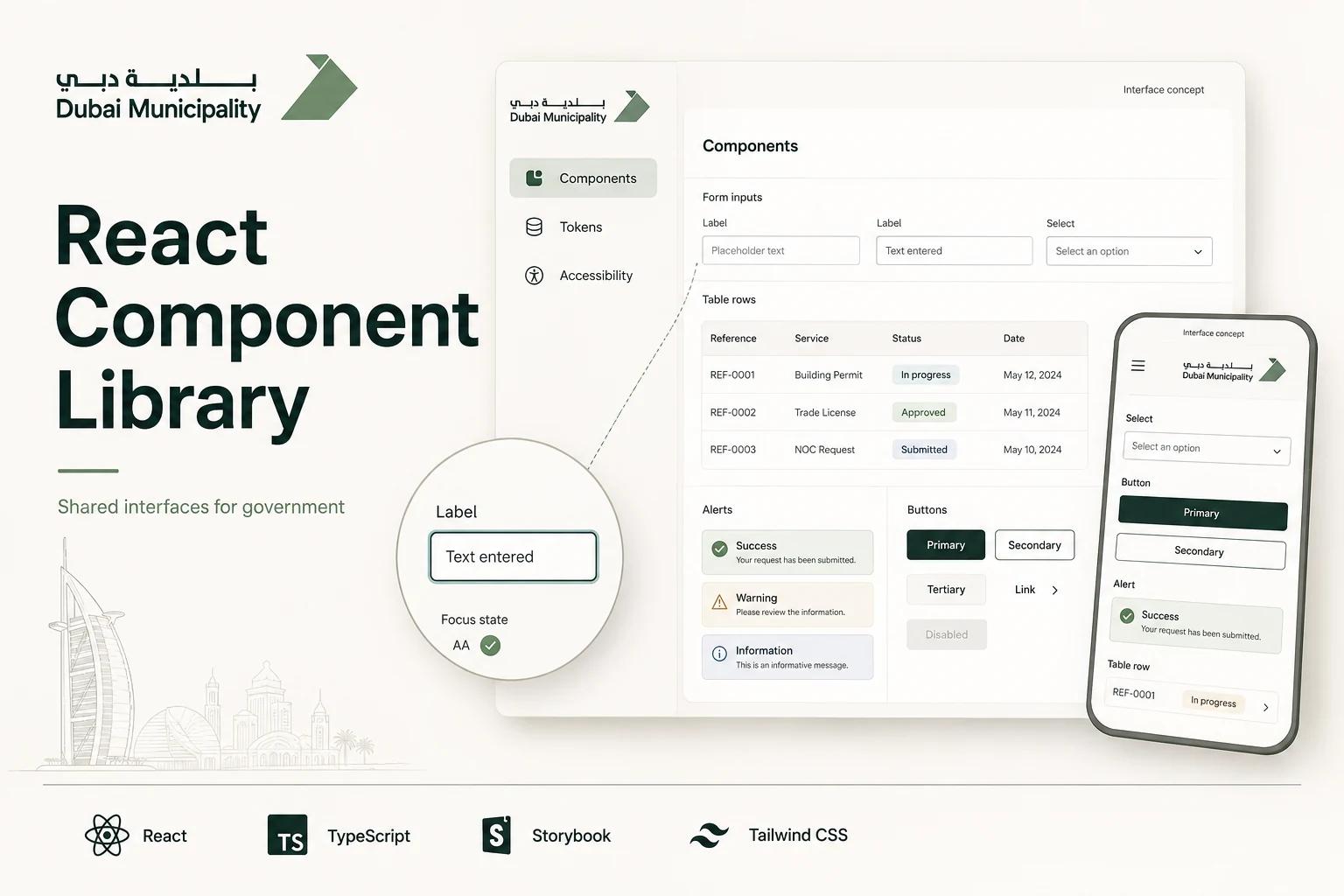
React Component Library
Shared React component library built for Dubai Government platforms to unify the design system across multiple services, accelerating delivery and enforcing consistent, accessible UI standards.
Read the engineering story
The problem
Dubai Government product teams were independently rebuilding similar UI components, leading to inconsistent experiences, duplicated logic, and increased maintenance overhead. This was slowing down delivery and increasing maintenance costs.
The approach
Created a centralized, government-grade component library with strict architectural and accessibility standards, enabling teams to reuse components confidently and consistently. This has significantly reduced duplicated UI development and increased maintainability.
Component implementations and internal tooling details are generalized due to government confidentiality.
Tools of the work.
- React
- TypeScript